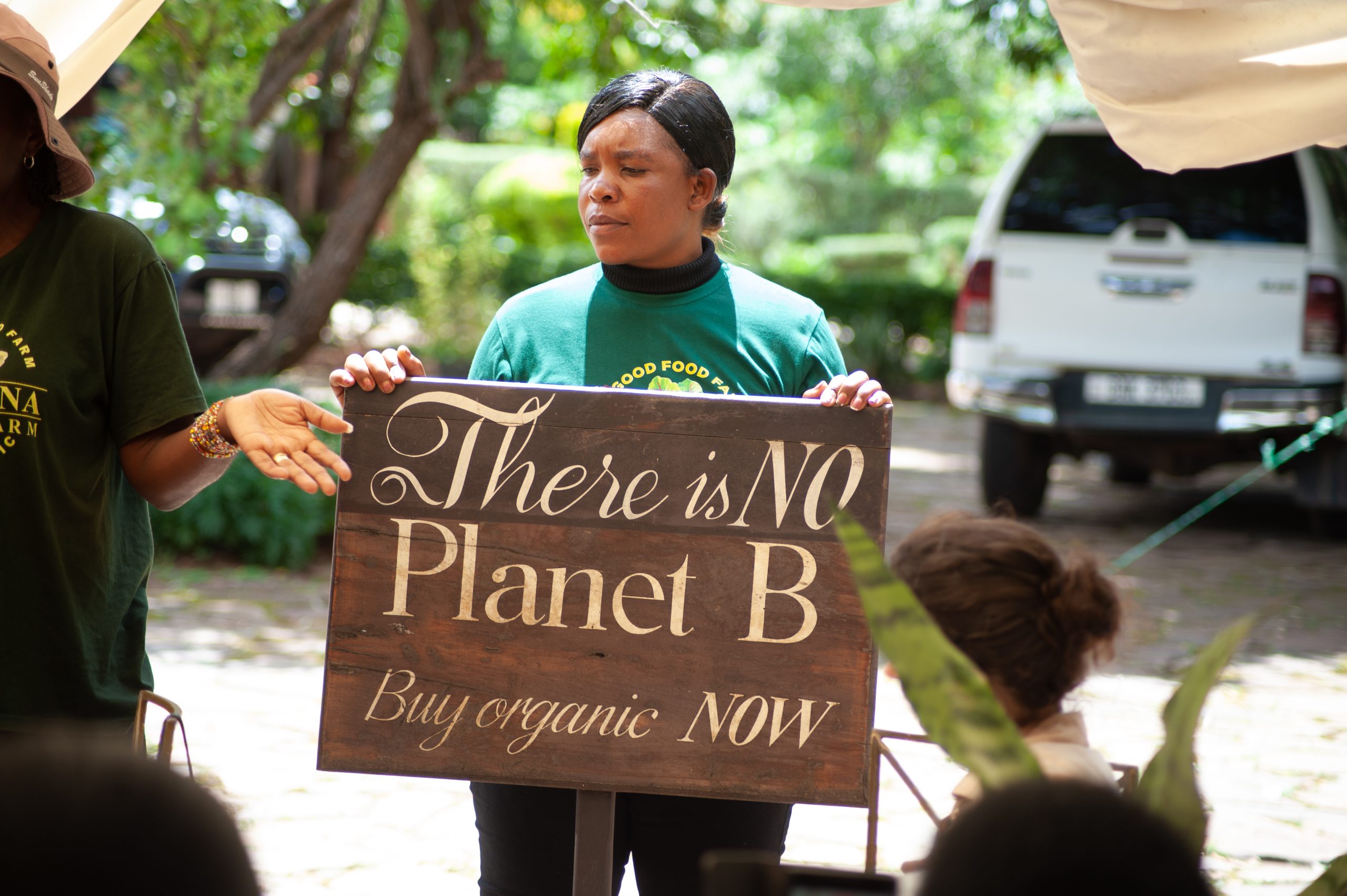
KHSA-RAENS: Farm food jams and policy panels in Lusaka, Zambia
From 3-5 March, KHSA partners met in Lusaka for a Leadership Collective meeting, including a regional knowledge exchange around the development of Zambia’s National Agroecology Strategy.
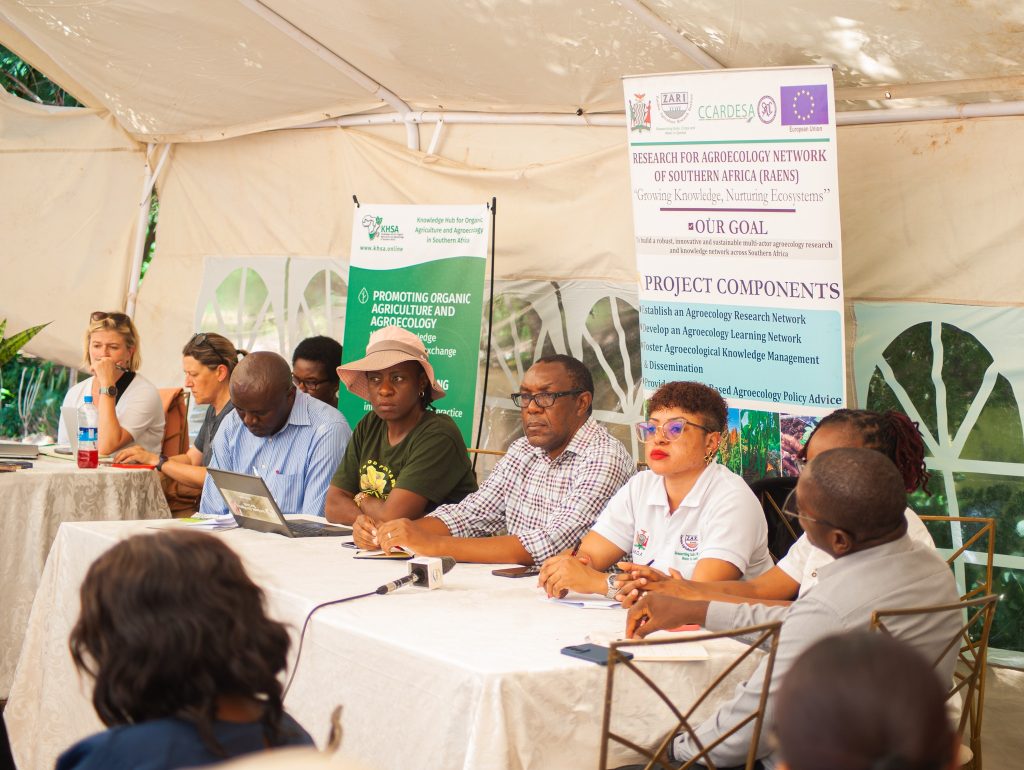
This knowledge exchange, in partnership with the Research for Agroecology Network for Southern Africa (RAENS) and Loctaguna Organic Farm, took the form of a KHSA Farm Food Jam (a methodology developed for working with media) and a policy panel with government ministries, national research and educational institutions, and civil society organisations.
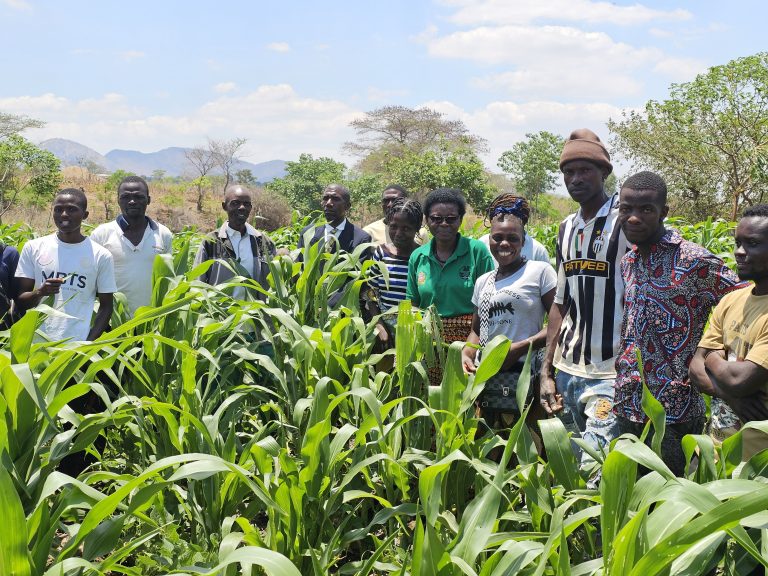
This exchange brought together KHSA partners from Malawi, Namibia, South Africa and Zambia, with participation from FiBL and other RAENS stakeholders, to learn directly from institutions and stakeholders who have contributed to Zambia’s national agroecology strategy development process. The focus was on practical learning around process, coordination and implementation pathways that can strengthen national strategy development efforts across the region.
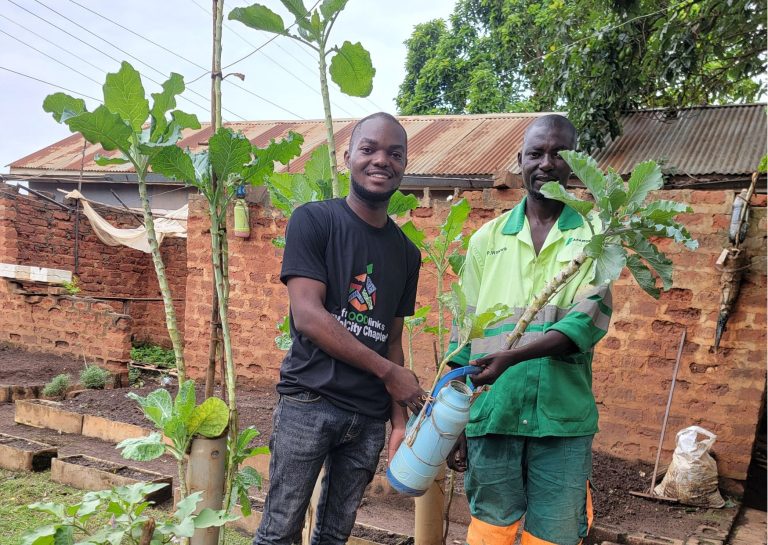
The KHSA Farm Food Jam is a planned farm tour, in which participants visit different stations learning about different aspects of agroecology, followed by collaborative harvesting and lunch preparation. It immerses participants in the beneficial ecological, social and economic aspects of organics and agroecology.
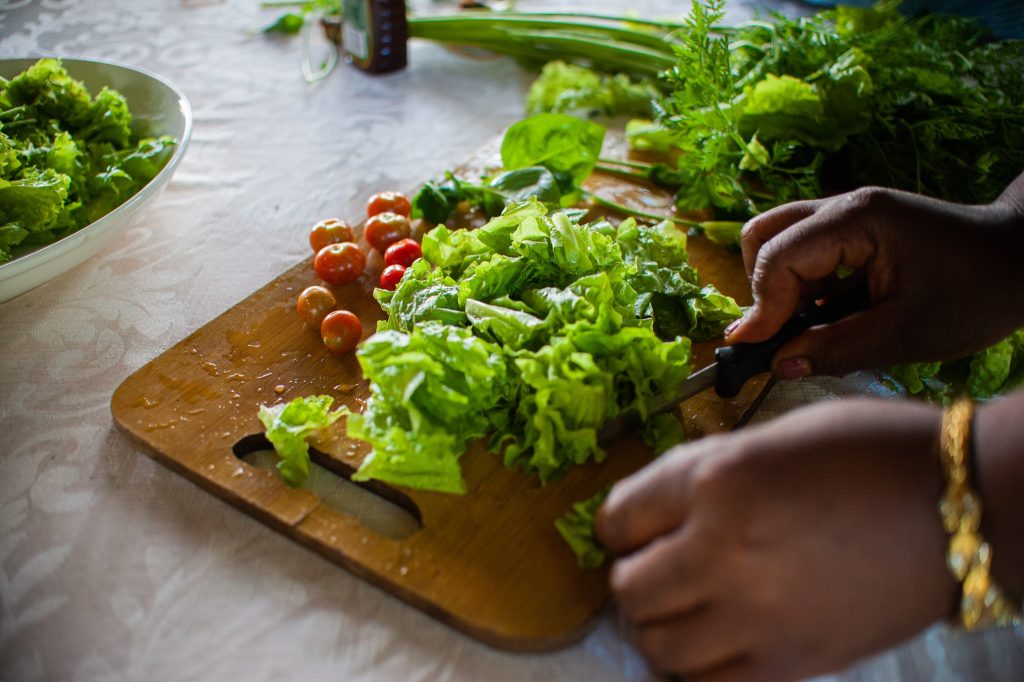
Captions: Images from KHSA-RAENS Farm Food Jam and policy panel, Loctaguna Organics, 4 March 2026 Credits: Thompson Mwale
Bold Voices in Agroecology: Zimbabwe’s AWOLA Cohort 3 Shines at the Africa Women in Agroecology Learning Exchange Expo 2025
By Violet Makoto and Valerie Chatindo, AWOLO Zimbabwe
There is a certain magic that happens when women gather. Beyond the laughter and radiant smiles lies authenticity, kindness and unspoken solidarity that transforms a space into something extraordinary.
That spirit was evident when the African Women Leaders in Agroecology (AWOLA) Cohort 3 from Zimbabwe joined sisters at the PELUM Kenya-hosted Africa Women Expo and Exchange Learning in Agroecology, Agro-preneurship and Land Rights 2025 from 2-3 December at the Desmond Tutu Conference Center, Nairobi.
Hosted by PELUM Kenya, the opening day was nothing short of a celebration. Women from Nigeria, Tunisia, Ghana, Uganda, Kenya, South Africa, Zambia, Malawi and Zimbabwe entered the hall waving their national flags, their dances filling the air with rhythm and joy. It was a kaleidoscope of African diversity, a reminder that agroecology is not just about farming, it is about culture, identity and resilience.
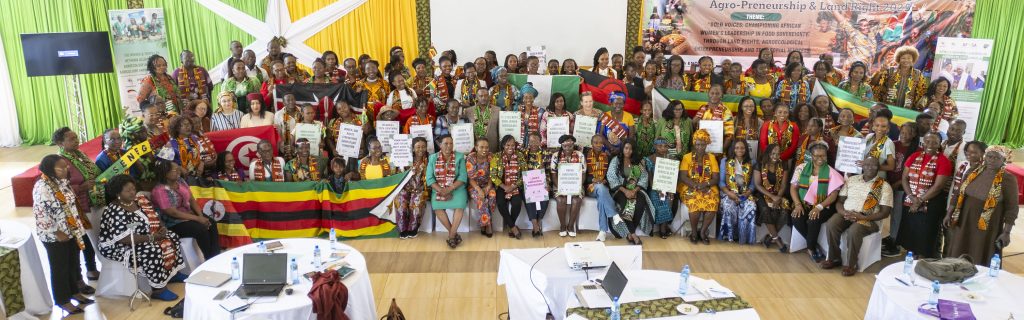
Hosted by PELUM Kenya, the opening day was nothing short of a celebration. Women from Nigeria, Tunisia, Ghana, Uganda, Kenya, South Africa, Zambia, Malawi and Zimbabwe entered the hall waving their national flags, their dances filling the air with rhythm and joy. It was a kaleidoscope of African diversity, a reminder that agroecology is not just about farming, it is about culture, identity and resilience.
The first plenary, From Local Voices to Policy Tables, emphasised the need for women’s active participation in food systems governance and the urgency of broader adoption and deeper inclusion of women in policymaking processes. If the first day was about vision, the second was about action. A plenary session opened the floor to a dynamic panel discussion titled: Women at the Frontlines of Agroecology: Powering Markets, Seeds and Enterprise Transformation Across Africa. The session Amplifying Women’s Voices in Agroecology noted that despite being central to African agricultural economies, many women lack secure land tenure. Speakers stressed the need for governments to prioritise women’s access to and control over land as foundational to agroecological transformation.
The Expo was more than a conference—it was a declaration. Women are not waiting for permission to lead, they are already leading. Agroecology is not just farming – it is justice, equity and sovereignty. And when women come together, they create not only energy, but transformation.
Leaving Kenya, AWOLA Zimbabwe Cohort 3 carried renewed commitment: hope that agroecology will continue to grow as a movement for justice and sovereignty and hope that women’s voices will not only be heard but influence policy and markets.
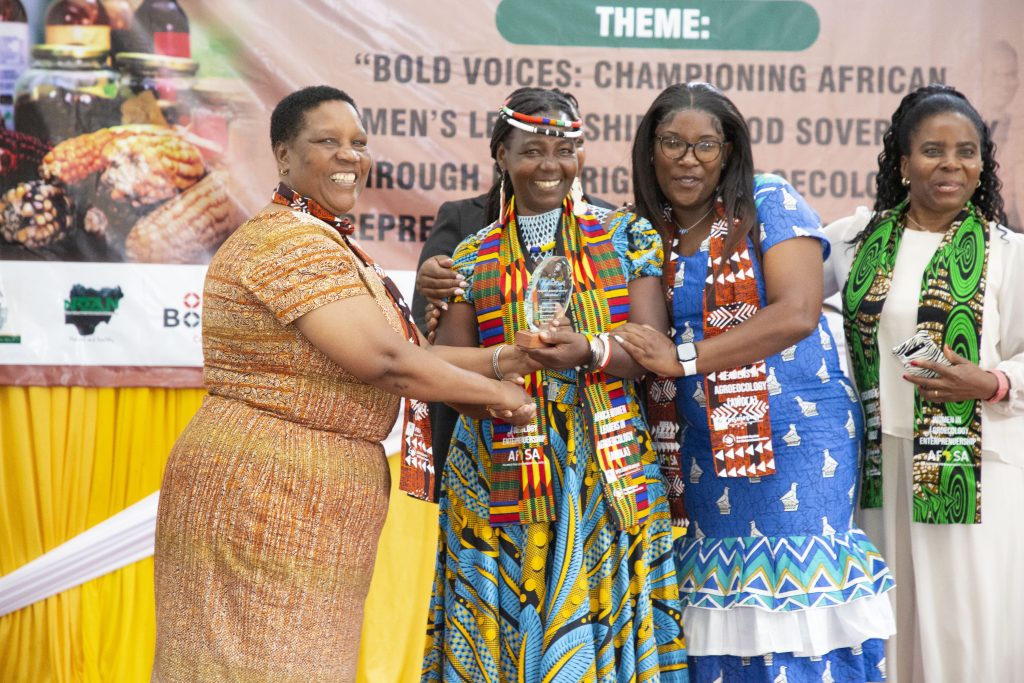
Top image: Zimbabwe’s Shean Mukocheya (2nd from left) received the Community Agroecology, Mentorship and Leadership Award, which honours women advancing agroecological transformation, championing climate justice and mentoring others. Credit: AWOLA Middle image: Two days of building a sisterhood that transcends borders and languages, 2025 Credit: AWOLA
Africa at heart of global organic movement
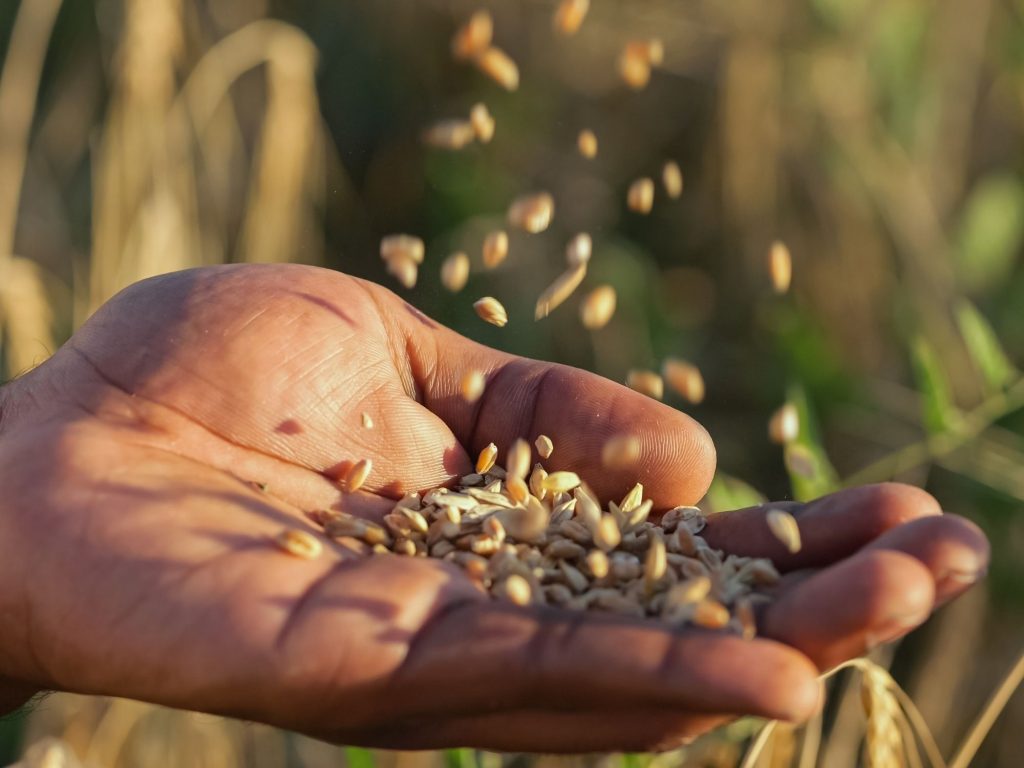
Across Africa, organic agriculture is not a trend, it is a lived reality. From smallholder farmers preserving biodiversity to national movements strengthening local markets, to innovative businesses building resilient value chains, Africa is actively shaping the future of sustainable food systems.
At a time when climate instability, soil degradation, and market pressures are intensifying, organic agriculture offers resilience, dignity and long-term sustainability. But for organic to reach its full potential, African voices must not only be heard locally — they must be present and influential globally. This is why the upcoming Extraordinary General Assembly of IFOAM – Organics International is such an important moment. Held online and open exclusively to members, it is where key decisions about the direction and governance of the organisation are discussed and adopted.
The Extraordinary General Assembly of IFOAM – Organics International is not a symbolic gathering.
It is a democratic process that defines priorities, strengthens leadership and ensures accountability. Members can register to vote through their member area. The voting deadline is 10 May 2026. Only members have voting rights, and this is where Africa’s opportunity becomes clear.
Become a member by visiting: 👉 https://www.ifoam.bio/about-us/our-network/become-affiliate
Membership matters: It is stepping into a global platform that amplifies your voice, strengthens your impact and connects African organic leadership to international decision-making.
Becoming a member is more than joining a network:
- Members gain access to regular free webinars, knowledge exchange platforms and global collaboration opportunities.
- IFOAM – Organics International stewards the Global Organic Guarantee System, including the IFOAM Family of Standards, “Standards from the Shelf,” and the promotion of Participatory Guarantee Systems (PGS).
- IFOAM represents the organic movement in major global policy spaces. This enables African realities and experiences inform discussions on climate policy, food security, biodiversity and sustainable trade.
- IFOAM – Organics International amplifies the voices of African initiatives, innovations and successes, through its channels that reach thousands daily.
- Members have voting rights and directly shape the organisation’s direction, ensuring that African priorities influence global strategies.
Join as a member, participate and lead to influence global organic policy, strengthen organic integrity and market opportunities and amplify African leadership.
IFOAM – Organics International welcomes farmer associations, national organic movements, private organic businesses, and organisations aligned with organic principles. Membership fees are structured according to the size and budget of your organisation, making participation accessible to groups of different scales. Associates and Supporters engage with and strengthen the movement. Affiliates take the additional step of shaping it.
Become a member by visiting: 👉 https://www.ifoam.bio/about-us/our-network/become-affiliate
Africa’s organic future will not be defined elsewhere. It will be defined by those who cultivate it, defend it, and lead it.
For questions, contact: membership@ifoam.bio